Submitted by gaaarp on February 28, 2010 - 1:45pm

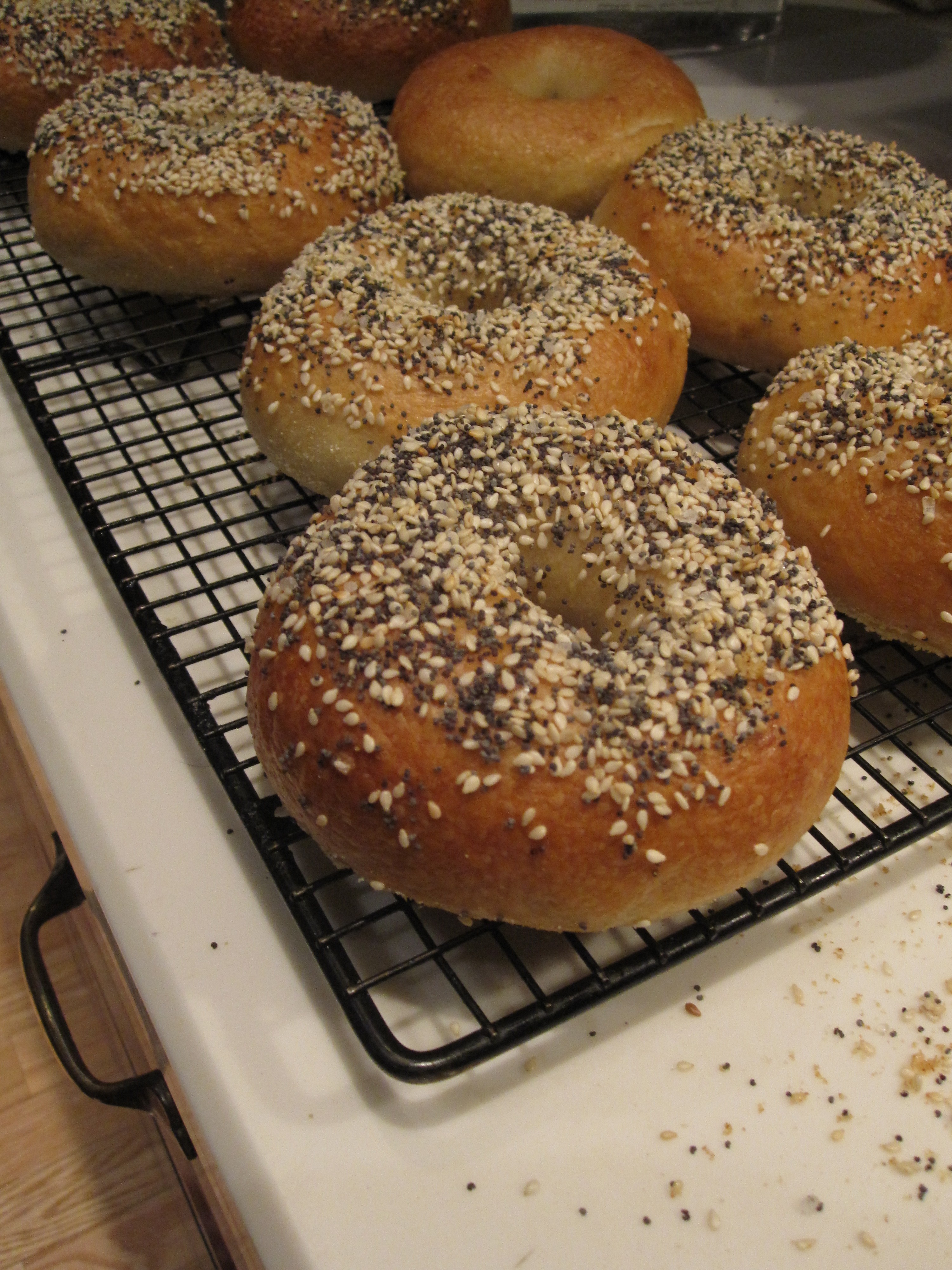
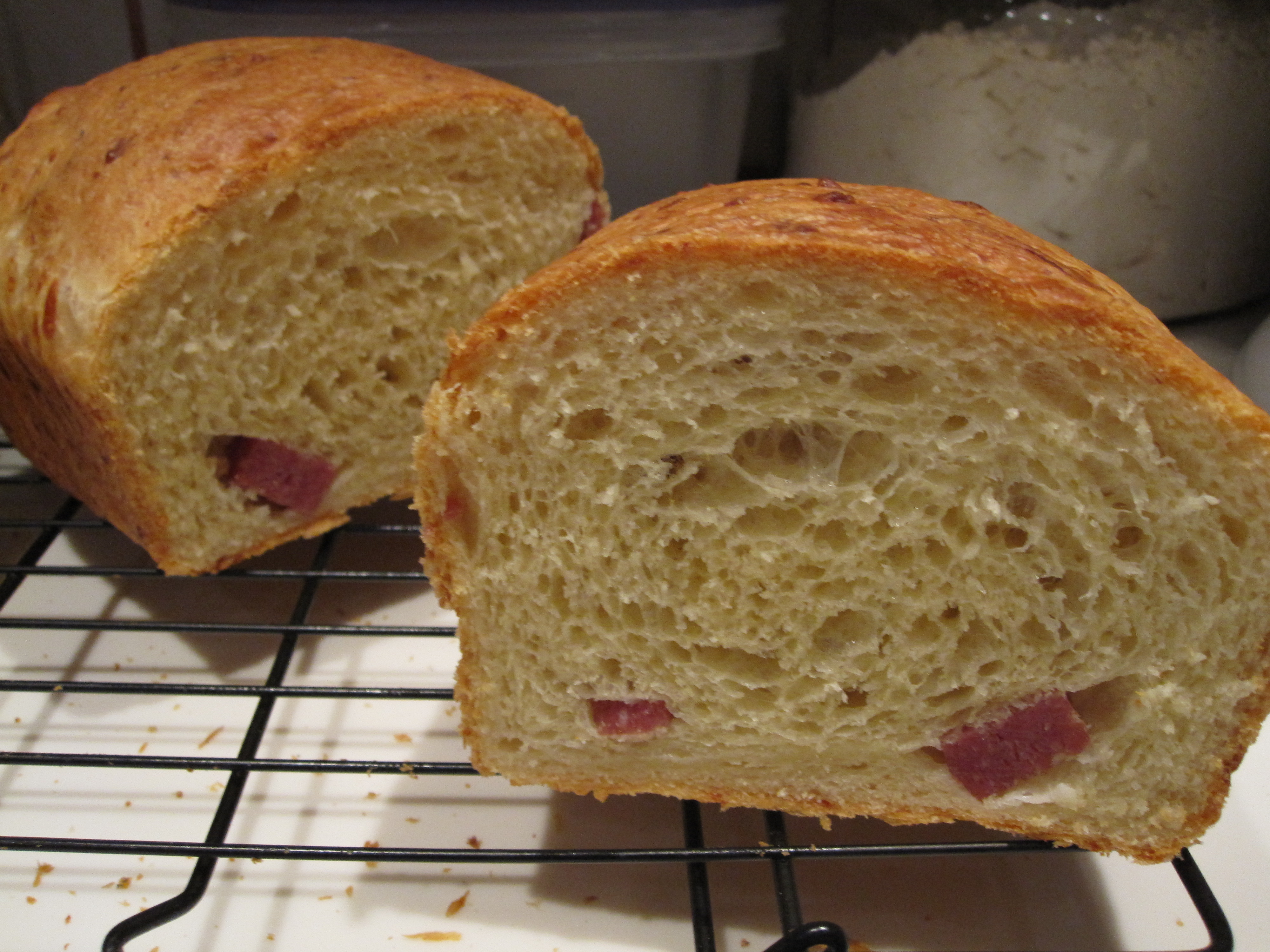
PR's Potato, Cheddar,and Chive Torpedoes


I made Peter's Potato, Cheddar, and Chive Torpedoes today from BBA. If you haven't tried this recipe, you owe it to yourself! Man, these are good!!

http://wp.me/pwL3l-8A

Submitted by tmfun on October 29, 2009 - 10:24pm

My twist on BBA Castiello bread With Sharp Chedder and Jalapino's

This is my first post here so I think I should take a moment to introduce myself.  My name is Buddy and I live in San Jose, California.  Almost exactly a year ago, My wife and I went to Tucson, Arizona to visit some relatives.  While doing some shopping, we both noticed that one supermarket was selling Pumpernickle bread.  We both like Pumpernickle and it is almost never available in our area so we vowed to buy some to take back with us.  Needless to say, that didn't happen.  When we got home, we both remarked that we were dissapointed that we didn't get around to buying any Pumpernickle.  I, being a typical guy, who also likes to cook figured, what the heck, I'll make my own.  How hard can it be? 

After several hours of research on the internet tubes, I stumbeled across this site and boy was I in for a surprise.  I had, in the course of my 59 years on this planet, baked a few loaves of bread.  I purchased a couple of bread machines but was never really happy with the "bricks" they produced so I ended up giving them away.  Suddenly, my quest to make Pumpernickle seemed completely daunting.  Bread measured in grams rather than cups?  Hearth baking?  Steaming the oven?  Wild yeast starters?  The whole thing seemed way above my pay grade.  I was pretty sure that home made Pumpernickle was not going to happen in my lifetime.  However, I noticed a beautiful looking reicipie on this site for a Blueberry, creamcheese twist.  I was captivated by the photo and, after reading the instruction thought, "Hey, I can do this!"  I tried it and it came out better than my wildest expectations.  Not only was it beautiful, but it tasted better than anything I had ever purchased from farmer Safeway.  I was excited!  After reading the comments section, I tried all kinds of things with this.  I filled it with Ham and roasted Garlic and Brie, Sausage and Rosemary and Chedder, everything I tried came out wonderful.  I was hooked.  I started reading the book reviews here and finally took the plunge and ordered "THe Bread Bakers Apprentice".  Why that one?  I liked the cover photo.  Go figure.

Being a guy, I only spent a cursory amount of time on the first several chapters and went straight to the Annadama bread.  Having no bread pans, I made a trip to the local supermarket and bought a couple of cheap bread pans and made the bread.  My results were flavorfull but not much to look at.  At about that time, I read a post from Flour Girl's blog http://www.flourgrrrl.com/ about the results of baking in different kinds of pans and decided to try her rec for the La Crueset bread pans.  The results were markedly better with La Crueset and I was off and running.  My kitchen soon sported two La Cruset bread pans, a scale, a couch, a couple of Bennetons, a temp probe, and on and on and I'me having a ball.

Almost a year later, my family thinks I am the best bread maker ever.  I didn't take the Julie and Julia approache to BBA, but rather, skipped to the recipies that looked interesting.  Right now, my biggest problem is that I have so many requests to keep making the breads that I already make that I have no time to try new ones.

Now, to get to the point, One of the third bread recipies I tried to make was Peter Reinhart's Castiello.  I was captivated by the pictures.  It looked really good.  Mind you, I had only been at this for a month or so at that time and the result was, shall we say, underwhelming.  Fine.  I went on to other breads like the Cinnimon Raisen Bread, the Potato Rosemary bread (great croutons and dinner rolls by the way), the Pain A L'ancianne (best baguettes ever!) and didn't give it another thought...until

About a month ago, my wife brought home some tortillias made with Chedder cheese and Jalapino's.  They were wonderful.  I got to thinking, this could work in Peters Castiello bread maybe.  I decided to give it a try.

To Peters recipie, I added 6 oz of whole Jalapino's (canned with the seeds and juices and carrotts and onions ) chopped into a fine dice, about 6 oz. of sausage,  It does not seem to matter what kind, I have tried everything from breakfast sausage to Polska Kilbassa and they all work, and 6 oz of Very sharp chedder, grated, 

I make this bread according to Peters instructions EXCEPT, I throw everything in at once.  I don't wait for the mix to turn into dough before adding the extras, I just mix it all up.  I don't have a machine to mix this with so I just do it by hand useing the turning bowl method. 

I have not been doing this long enouh to make "pretty" bread so I will not post any pictures.  All I can say is that when your 30 year old grandson tells you that this is the "Most awsome bread he has ever tasted"  you feel pretty good.  And, for what it's worth, my pupernickle is not bad either.

I would post the whole recipie here but I'm not sure what the copyriht issues aer and I figure most of you have a copy of BBA.  Also,with  my typing skills, It would take all night.

Really good bread though.

Bud


Submitted by SumisuYoshi on October 29, 2009 - 6:14pm

BBA Bagels

Bagels

I've never been a big fan of bagels, which is part of why I skipped this recipe at first, but I know a lot of people who like them so I finally decided the time was right. First step of the recipe is easy, making a sponge, just water, flour and yeast left to expand for a few hours.

Bagel Ingredients (for sponge)

Mixed Sponge

Bagel Sponge

Once the sponge is ready, time to (attempt) to mix in the rest of the flour, the yeast, and malt powder. I say try, because bagel dough is really low hydration so I ended up needing to add a fair portion of the flour during the kneading. There was just no point in adding more to the dough while it was still in the bowl. And boy did it require a lot of kneading...

Flour, Salt, Malt Powder

Once kneaded I let the dough rest for a bit and started dividing it into roughly equal balls. Followed by a bit more resting, and shaping into bagels (I used the thumb punch shaping method shown in the book, it worked really well). Then the shaped bagels took a trip to the fridge for retardation overnight.

Divided Bagel Dough

Preshaped Bagels

Shaped Bagels

I wasn't really sure of the taste in bagels of the people I was making these for, so I stuck with plain, poppy seed, sesame seed and cinnamon raisin (trying to make 1/4 of the dough cinnamon raisin after the dough is already mixed is VERY tricky, I do not recommend it, but it was the only way I could see to easily divide it so). The boiling process before topping the bagels was easy, a little bit of baking soda and malt powder added to the water (they really make it foam up!) and away they went. I didn't notice I had no cornmeal or semolina left before I started, and the semolina flour worked less than perfectly when placing the boiled bagels back on the sheet pan, which definitely reminded me to pick up cornmeal the next time I was at the store.

Boiled and Topped

I followed the suggestion in the book to top the cinnamon raisin bagels with brushed on butter and a cinnamon sugar topping, looked delicious! As did the rest of the bagels. Note, I say looked, I made this first batch to take in to people at school and since I only made the single batch of 12 I didn't actually get to try any(I did the next time I made them though)! One thing I was surprised by during the baking process was the blast of steam/water vapor when you open the oven to turn them around, I'm not sure if it is because of all the water in the crust from the boiling or the baking soda... But when I opened the oven to turn them around it felt like some sort of chemical weapon assault! Never experienced that when baking bread before.

Cinnamon Raisin Bagels

Plain Bagels

Sesame Seed Bagel

Poppy Seed Bagel

Sliced Bagel

Another post submitted to YeastSpotting , having that available to submit posts to really keeps me inspired to bake, and I love seeing what other people have made each week, thanks so much Susan! Bread Baker's Apprentice Challenge

Submitted by jj1109 on June 14, 2009 - 11:42pm

Potato rosemary bread (BBA)

I have been aching to bake this bread since I first encountered the recipe months ago. However, I'm sure you all encounter the little things that fill your weekends and make well, a big mess of those best laid plans you make Friday evening. I set myself quite a task this weekend - two loaves of multigrain, and this new recipe!

OK, perhaps not such a large task. Especially considering how I have perfected the multigrain recipe... maybe. I'm yet to slice this batch and I have that slightly worried feeling that they aren't quite done in the centre...

(edit to add: I sliced them, and they're... OK. not great, right in the very middle they were very soft, but I think I just passed the test. Won't proof them so long next time ;) eg. err 4 hours instead of 45mins - 1hr.)

This turned out pretty darned nice. OK, I ignored the recipe that said this made two one pound loaves. That was a mistake... this turned into a monster, a good 30cm across. The dough wobbled like a jelly as I put it into the oven - I think I added a fraction too much yeast, the recipe called for 1 1/4 tsp, which I think it said was about 3 or 4g, I tipped some yeast in straight onto the flour (why? I never do it this way for this exact reason) tip tip tip I still have added 0g. That sure looks like a lot more than 1tsp. I must remember never to do that again!

Onto the results:

The loaf came out of the oven beautiful and crisp, however shrank a little whilst cooling and the crust softened - I've never mastered a nice crunchy crust with my oven without using the "magic bowl" technique. This was the softest loaf of bread I have ever felt, and had good spring in the loaf itself. Sliced into nice inch thick slices, dipped in tomato and kidney bean soup, devine. Another recipe to add to the repertoire.


Submitted by rainbowz on February 7, 2009 - 4:54pm

Reinhart's Potato Rosemary Bread


This is from a recipe in Peter Reinhart’s Bread Bakers Apprentice and I didn’t make any changes to the recipe, being the first try at it. 

Well, ok, one or two very minor changes: he asks for fresh rosemary, I only had dried which I soaked for an hour while the dough was warming up. He says to mix in roasted garlic - didn’t have any. I guess next time I’ll have to make that ahead of time along with the extra mash. 

Anyway… here’s the final product, first try (slashed a bit too deep) and the loaves are still cooling so I haven’t cut or tasted yet but boy-oh-boy, does the house ever smell wonnnnnnderful!!

Potato Rosemary Bread

Full post on the blog:
Potato Rosemary Boules


Submitted by gaaarp on January 12, 2009 - 5:29pm

Starting a Starter - Sourdough 101, a Tutorial


(The following started as a blog, but I've had enough questions and comments about it that I thought I'd repost it as a forum entry so it would be easier to find.  Of course, if Floyd wants to add it to Lessons, that would be OK, too.)

Like many people, I found TFL in my quest to learn how to make sourdough.  I had a starter going and was sure I had killed it.  The advice I found here gave me the knowledge and confidence to make a starter that I've been using for months now, with ever-better results.

Although there is a wealth of information here, there was no one source that detailed the method I used, which was based on Reinhart's "barm" in BBA.  Now that I have succeeded in making several starters, I've been thinking about making a video tutorial to walk through the process step-by-step, day-by-day.  My own experience and that of others here has taught me one thing:  sourdough starters don't read baking books, so they don't know how they are "supposed" to behave.  I could have been spared the angst, the wasted time, and of course, pounds of precious flour, if only I had known what to expect and what to look for. 

I don't have the technical part of video-making worked out yet, so I have decided to do a tutorial blog.  This will be a real test, as I am trying out a modified starter that I haven't made before.  It's still based on Peter's starter, but I have altered the amounts, and possibly the times, to suit my own fancy.  If all goes well, I will end up with a more reasonable (i.e., much smaller) amount of starter, and I will get there with much less wasted flour.

So here goes:

Day 1: 

Ingredients:  1/3 cup rye flour and 1/4 cup water

For the flour, I use stone-ground rye.  Nothing special, just what I got from the grocery store.  My water is tap water run through a filter.  Before I had a filter on my sink, I used bottled drinking water.

Mix the flour and water in a bowl.  It will be thick and pasty, kind of like the oatmeal that's left in the pot if you don't come down for breakfast on time. 

Day 1 - thick and pasty

Once all the flour is mixed in, put it in a pint-sized or larger container and cover with plastic wrap.  Leave it out on the counter. 

Day 1 - ready to rest

And that's it for today.


Day 2:

Ingredients:  1/4 cup unbleached AP, bread, or high gluten flour; 1/8 cup water

There should be little, if any, change in the culture from yesterday.  Again, I'm not really particular about the flour.  I would just recommend staying away from bleached flour.  I am using AP flour for this batch.

Mix the flour, water, and all of the starter from yesterday in a bowl.  It will still be thick but a little wetter than yesterday. 

Day 2 - still thick, but not quite as gooey

Put it back in the container (no need to wash it), press it down as level as you can get it, and mark the top of the culture with a piece of tape on the outside of the container. 

Day 2 - nighty night

Put the plastic wrap back on top, and you're finished.


Day 3:

Ingredients:  1/4 cup unbleached AP, bread, or high gluten flour; 1/8 cup water

Around Day 3 or 4, something happens that puts terror in the heart of the amateur sourdough maker:  they get a whiff of their starter.  When you check your starter on Day 3, you may notice a strange, and not at all pleasant, odor.  And unless you know better (which you will now), you'll swear something is drastically wrong.  In fact, I would venture to guess that that smell has been the ruin of more amateur sourdough growers than anything else.  It's an acrid, sour, almost rotten smell, and it's perfectly normal.  And rest assured, your new baby sourdough starter will soon outgrow it.  So, take heart, and press on.

You may also notice that your starter has begun to come to life.  It probably won't grow a lot, maybe 50%, but you will start to see bubbles, like these:

It is ALIVE!!!!!

Regardless of the amount of growth, stir down your starter, throw out about half (no need to measure, just eyeball it), and mix the rest with today's flour and water.  You will get a slightly more doughy-looking mass:

Is is soup yet?

Once it's well mixed, put it back in the container (still no need to wash), pat it down, and move your tape to again mark the top of the starter.  From this point forward, keep your starter at a moderate room temperature, 70-72 degrees F.  Lower is OK (it will just grow more slowly); but don't keep it at a higher temperature, or you will encourage the growth of the bacterial beasties at the expense of the yeasty beasties.

Let 'er rise

Put the plastic wrap back on the container, and take the rest of the evening off.  You worked hard today.


Day 4:

Ingredients:  1/4 cup unbleached AP, bread, or high gluten flour; 1/8 cup water

And now, a word about measurements.  If you bake regularly, or even if you've just been nosing around baking sites for a while, you are no doubt aware that the ingredients in most artisan bread recipes are listed by weight rather than volume.  I measure by weight for my baking and for maintaining my sourdough starter. 

You might wonder why, then, am I using volume measurements here?  Two reasons: first, I have tried to make this starter as simple to follow as possible -- no special tools, no monkeying around with the scales, just a couple of measuring cups and a bowl.  And, when it comes to starting a starter, the measurements aren't as critical as when you actually go to bake with it.  So for now, we're just using measuring cups. 

Today is another one of those days where novice sourdough starter makers often lose heart.  Your starter is now coming to life, and like most living things, it kind of has a mind of its own.  Up until now, we followed the clock, making our additions every 24 hours.  Now, we will be letting the starter dictate the timeframe. 

Before you do your Day 4 additions, you want to make sure your starter has at least doubled.  If it doubles in less than 24 hours, you should still wait until the 24 hour mark.  If it takes more than 24 hours, be patient.  Let it double.  It may take another 12 or 24 hours, or it may take longer.  Again, be patient.  It will double.  Just give it time.

If your starter hasn't doubled after 48 hours, you can boost it with a shot of rye flour.  Add 3 to 4 tablespoons of rye flour and a bit of water (try to keep the hydration level about where it was) and mix it up.  Then wait for it to double before proceeding with the Day 4 additions. 

Eventually, you'll end up with a nice, bubbly starter:

Day 4 - rising to the occassion

You can see that mine more than doubled.  But I still waited for 24 hours.  Once it doubles, throw out half of the starter, then mix the rest with the flour and water, and back into the bowl it goes:

Day 4 - Edwina, back in bowl

Replace the tape and plastic wrap.  Then wait for it to double.   It could take as little as 4 hours, or it may take more than 24 hours.  This time, you can move on to Day 5 at any point after doubling.  It's OK if you let it more than double; it's also OK to move on right when it hits the double mark.  So, hurry up and wait.


Day 5:

Ingredients:  3/4 cup unbleached AP, bread, or high gluten flour; 1/2 cup water

Once your starter has at least doubled, it's time for the final mix.

Day 5 - alive and kicking

Combine flour, water, and 1/4 cup starter in a bowl and mix well.  Transfer to a clean container with room for the starter to at least double.

Day 5 - final mix

OK, one last time, cover with plastic wrap and let it sit on the counter until it gets nice and bubbly.  Don't worry so much about how much it grows, just so that it's bubbly looking.  This will probably take around 6 hours, but, again, don't stress about the time.  Let the starter tell you when it's ready.

Day 5 - Congratulations, it's a bouncing baby starter!

When your starter gets bubbly, pat yourself on the back:  you are now the proud parent of a bouncing baby starter!  Put a lid or other cover on your container and put it in the refrigerator.  Let it chill overnight, and you can begin using it the next day.

Day 6 and beyond:

By today, your starter is ready to use.  The flavor will continue to develop over the next several weeks to month, so don't be disappointed if your first few loaves aren't sour enough for you.  I would still recommend beginning to bake with it right away, especially if you have never made sourdough bread before.  That way, you can hone your skills while your starter develops its flavor.

Feeding your sourdough:  If you keep your sourdough in the fridge, you only have to feed it about once a week.  And you can minimize your discards by keeping only what you need and feeding it when you want to bake with it.  I recommend a 1:1:1 (starter:water:flour) feeding, which means each feeding includes an equal amount, by weight, of starter, water, and flour. 

Start by weighing your starter, subtracting the weight of your container.  Then add an equal amount of water and flour directly to the container.  So, for example, if you have 100 grams of starter, you would add 100 grams each of water and flour.  I generally add the water and flour at the same time, although some people recommend adding the water first and whisking to dissolve the starter before adding the flour. 

If you feed your starter right out of the fridge, as I do, warm your water to lukewarm (90 - 100 degrees F).  After you mix in the water and flour, leave it out on the counter for a few hours, then put it back in the refrigerator.  It's best if you feed your starter a few days before you intend to bake with it.

To illustrate, here is an example of my feeding routine, starting with the Day 5 starter and assuming that I finished making the starter on Friday night:

  • Saturday morning, I take out what I need to bake bread (2/3 cup using my normal sourdough bread recipe) and return the rest of the starter to the refrigetator.
  • Wednesday of the next week, I get out the starter, weigh it, and add equal amounts of flour and water in a 1:1:1 ratio, as outlined above.  My goal here is to build up as much starter as I need to make bread on the weekend, and enough left over for my next build.  It's OK if I have more than I need to bake with.  If I don't think I'll have enough after a 1:1:1 build, I will increase my ratio of flour and water, maybe to 1:2:2 or 1:1.5:1.5.  In that case, I will let it sit out until it almost doubles before returning it to the fridge, which might take a bit longer, as I'm using less starter relative to flour and water.
  • Friday night or Saturday morning, I again take out what I need to bake with and return the rest to the fridge, to be fed again mid-week.

This is just an example of how I keep my starter.  You can feed yours more often if you bake more than I do.  It's also OK to let it go more than a week between feedings.  If you do that, though, you might want to feed it a few times before you bake with it.

So, that's it.  Hopefully I've unravelled some of the mystery of sourdough starters and given you the confidence to try one yourself.  Good luck, and let me know how it works out for you!

Submitted by brakeforbread on January 3, 2009 - 12:11pm

A personal Ciabatta throwdown, and the questions that followed

Hello all. I started baking bread for the first time last year when I got ABI5MAD for the holidays. I worked on that for a good chunk of the year and finally started wanting to branch out into more traditional recipes. I have made several different recipes for bagels, including Hamelmans, PRs, and I have to admit, my NY grandfathers recipe is the best, dense chewy etc. I also recently made the buttermilk clusters from this site. Which turned out great. So now I have been wanting to experiment with more traditional recipes. I decided to make some ciabatta. I made Jason's Quick Ciabatta which I found at this site and the next day I made the Poolish version of PRs ciabatta from BBA. Without a doubt, Jason's version came out better. Better, crumb structure, moist and shiny irregular holes. PRs version tasted fine, but had a dense crumb, almost like a flat, softer crusted french bread. I followed the recipes exactly, weighed my ingredients, and as far as I can tell, handled the doughs similarly. Jason's version is a higher hydration, and was a much more slack dough, a bit difficult to work with, but worth it. I actually added a few extra TBS of water to the PR version to loosen it up.

Any thoughts on what I could be doing wrong with the PR version? Over ferment? Under ferment. As I mentioned I am fairly new to artisan breads and I don't have the best understanding of the science yet, but I am excited to learn.

Thanks for the site, and all of the knowledge that is shared here. It is indispensible to a new baker.


Jason's Quick Ciabatta


Poolish Ciabatta from PR's BBA


Any input would be appreciated.

Thanks,

Ethan

http://brakeforbread.blogspot.com

Submitted by gaaarp on November 11, 2008 - 8:28am

The Need to Knead


A few weeks ago, inspired by Peter Reinhart's The Bread Baker's Apprentice (BBA), I decided to make a seed culture-barm-sourdough starter.  My first attempt failed, due, I think, to my impatience rather than a true failure of the process.  My second attempt, seasoned with more patience, worked, and I am baking my first sourdough loaves today.

The BBA recipe for Basic Sourdough Bread states that you can knead the dough by hand for 12-15 minutes, or use the dough hook in your stand mixer and knead for 4 minutes, rest for 5-10, and knead an additional 4 minutes.  I have made bread off and on for about 30 years (since I was 10 years old), and I have always kneaded by hand.  Until recently, that is.  I took a French bread class, and the instructor kneaded the bread in the Kitchen Aid (KA) for the first 5-6 minutes, then finished with the "slap and roll" technique, where you take the dough by the edge in one hand, slam it on the counter for all you're worth, then use the other hand to do a jellyroll.  She said if you don't use the KA to start with, you would slap and roll about 100 times; starting with the KA, you only have to do it about 15-20 times.

I have been using this method for my French bread for a while now, with excellent results.  So I planned to use the KA for my kneading on the sourdough, as instructed in BBA.  But partway through the first 4-minute knead, something happened.  I suddenly realized that I missed kneading by hand, the old fashioned way!  So after the first knead, I put the dough to rest on the counter for a few minutes, then finished kneading by hand.  It was an almost-religious experience.  When the wild yeast started to come alive, the smell was absoulutely intoxicating.  And the time flew by.  The dough was ready to be set aside to ferment before I knew it.

It's good to get back to what I've always known and loved about bread baking.  That's not to say that I will never again opt for the convenience of the KA or the slap and roll, but when I have the time, I will always choose to knead by hand.

Submitted by mse1152 on February 22, 2008 - 9:04pm

BBA Poolish Baguettes

Happy weekend! I made baguettes for the first time in a long time today. BBA's poolish baguettes. One mistake...the recipe, er formula, calls for 7 oz. of poolish. I made half a recipe of poolish from the book, which is really more like 11 oz., and dumped it all into the final dough. ooooops. But what are you gonna do with 4 oz. of leftover poolish?

This dough gets 4 hours of fermentation and about an hour of proofing. The baguettes came out sorta pretty, I thought:

Submitted by Brigid on January 4, 2008 - 1:18pm

Cinnamon Raisin Walnut Swirl Bread - BBA

Yesterday I made the Cinnamon Raisin Walnut Swirl Bread from Peter Reinharts The Bread Baker's Apprentice. I have to say, that was the best bread I have ever tasted. It was so packed with raisins and nuts! I'm definitily going to make this again. Both loaves were gone before the end of the night and my family still wanted more. I feel bad for my sister who only got 2 slices....I think I had 5!


Me, dividing the dough: